
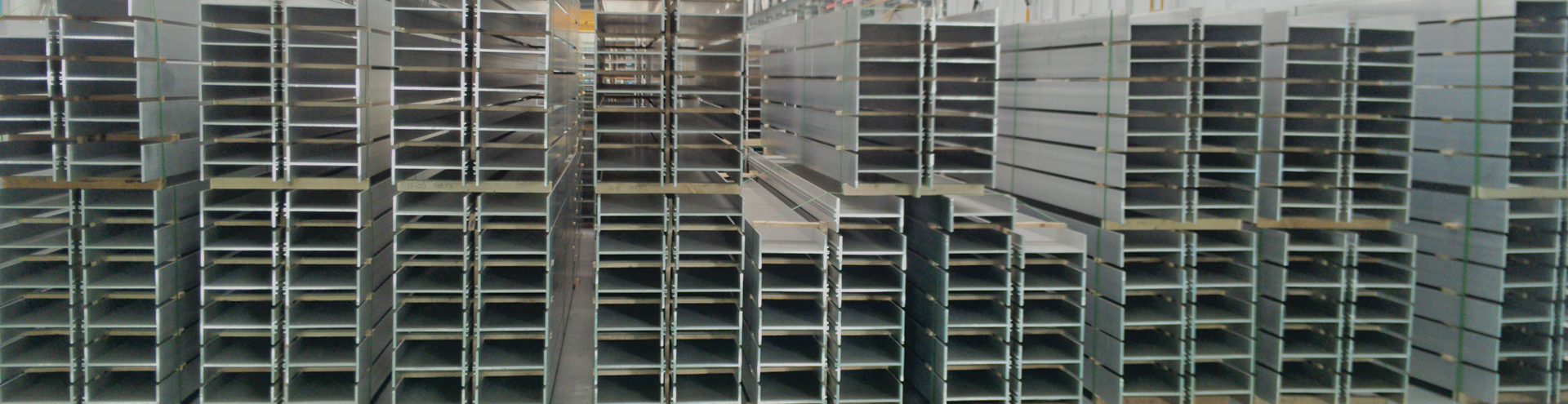
The selection of welding wires for aluminum and aluminum alloys is mainly based on the base metal type, comprehensively considering requirements for crack resistance, mechanical properties, and corrosion resistance of the joint. Sometimes, when a particular issue becomes the main concern, the choice of welding wire focuses on solving that primary issue while taking other requirements into account. In general, when welding aluminum and aluminum alloys, welding wires of the same or similar grade as the base metal are used to achieve good corrosion resistance. However, when welding heat-treatable strengthening alloys with high hot cracking susceptibility, the selection of welding wire mainly targets crack resistance; in this case, the wire composition may differ significantly from the base metal.
Common Defects (Welding Issues) and Preventive Measures
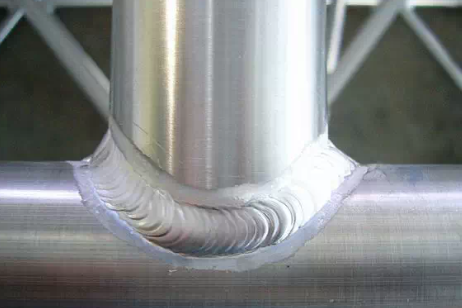
1. Burn-through
Causes:
a. Excessive heat input.
b. Improper groove preparation, excessive fit-up gap.
c. Excessive spacing between tack welds, leading to large deformation during welding.
Preventive measures:
a. Appropriately reduce welding current and arc voltage, increase welding speed.
b. Increase root face size, reduce root gap.
c. Appropriately reduce the spacing between tack welds.
2. Porosity
Causes:
a. Oil, rust, dirt, or contaminants on base metal or welding wire.
b. Strong air movement in the welding area, impairing gas shielding.
c. Excessive arc length, reducing shielding effectiveness.
d. Excessive nozzle-to-work distance, reducing shielding effectiveness.
e. Improper welding parameter selection.
f. Porosity generated at repeated arc strike points.
g. Low purity of shielding gas, poor shielding effect.
h. High ambient humidity.
Preventive measures:
a. Thoroughly clean oil, dirt, rust, scale, and oxide film from wire and workpiece before welding; use wire with higher deoxidizer content.
b. Choose a suitable welding location.
c. Appropriately reduce arc length.
d. Maintain proper nozzle-to-work distance.
e. Prefer thicker welding wire and increase the root face thickness of the workpiece groove; this allows higher current while reducing the proportion of filler metal in the weld metal, which is effective in reducing porosity.
f. Avoid repeated arc strikes at the same location; if necessary, grind or scrape the arc strike area. Once an arc is struck, try to weld a longer section without arbitrarily breaking the arc to reduce the number of joints; allow some overlap at joints.
g. Change shielding gas.
h. Check gas flow rate.
i. Preheat base metal.
j. Check for gas leaks and damaged hoses.
k. Weld when humidity is lower, or use a heating system.
3. Unstable Arc
Causes: Power cable connection issues, contaminants, or wind.
Preventive measures:
a. Check all conductive parts and keep surfaces clean.
b. Remove dirt from the joint area.
c. Avoid welding in areas where air currents can disturb the arc.
4. Poor Weld Bead Appearance
Causes:
a. Improper welding parameters.
b. Incorrect torch angle.
c. Unskilled welder operation.
d. Excessive contact tip bore diameter.
e. Moisture in welding wire, workpiece, or shielding gas.
Preventive measures:
a. Repeatedly adjust and select appropriate welding parameters.
b. Maintain proper torch inclination.
c. Select appropriate contact tip bore diameter.
d. Thoroughly clean wire and workpiece before welding; ensure gas purity.
5. Incomplete Penetration
Causes:
a. Excessive welding speed, excessive arc length.
b. Improper groove preparation, insufficient fit-up gap.
c. Too low welding parameters.
d. Unstable welding current.
Preventive measures:
a. Appropriately reduce welding speed, shorten the arc.
b. Appropriately reduce root face or increase root gap.
c. Increase welding current and arc voltage to ensure sufficient heat input to the base metal.
d. Add a voltage stabilizer.
e. Thin wire helps increase penetration, thick wire increases deposition rate; choose accordingly.
6. Lack of Fusion
Causes:
a. Oxide film or rust not thoroughly removed from the welding area.
b. Insufficient heat input.
Preventive measures:
a. Clean the surface to be welded before welding.
b. Increase welding current and arc voltage, reduce welding speed.
c. For thick plates, use a U-shaped groove rather than a V-shaped groove.
7. Cracks
Causes:
a. Poor structural design, excessively concentrated welds, leading to high restraint stress in the welded joint.
b. Excessive weld pool size, overheating, excessive alloying element burn-off.
c. Rapid cooling of the crater at the end of the weld.
d. Mismatch between wire composition and base metal.
e. Excessive weld depth-to-width ratio.
Preventive measures:
a. Correctly design the welded structure, reasonably arrange welds to avoid stress concentration zones, and select a proper welding sequence.
b. Reduce welding current or appropriately increase welding speed.
c. Correct crater filling technique; use run-off tabs or current decay device to fill the crater.
d. Select the correct welding wire.
8. Slag Inclusion
Causes:
a. Incomplete cleaning before welding.
b. Excessive welding current, causing partial melting of the contact tip which enters the weld pool and forms slag inclusions.
c. Excessive welding speed.
Preventive measures:
a. Strengthen pre-weld cleaning; for multi-pass welding, clean each pass after welding.
b. While ensuring penetration, appropriately reduce welding current; for high-current welding, do not press the contact tip too low.
c. Appropriately reduce welding speed; use wire with higher deoxidizer content, increase arc voltage.
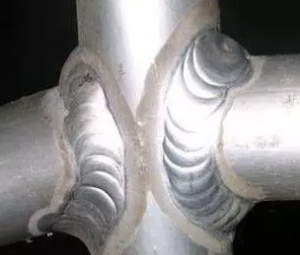
9. Undercut
Causes:
a. Excessive welding current, excessive arc voltage.
b. Excessive welding speed, insufficient filler wire feed.
c. Uneven torch weaving.
Preventive measures:
a. Appropriately adjust welding current and arc voltage.
b. Increase wire feed speed or reduce welding speed.
c. Strive for uniform torch weaving.
10. Weld Contamination
Causes:
a. Inadequate shielding gas coverage.
b. Contaminated welding wire.
c. Contaminated base metal.
Preventive measures:
a. Check for gas hose leaks, drafts, loose gas nozzles, and correct shielding gas.
b. Proper storage of welding consumables.
c. Remove oils and greases before using other mechanical cleaning methods.
d. Remove oxides before using a stainless steel brush.
11. Poor Wire Feedability
Causes:
a. Arcing between contact tip and welding wire.
b. Wire abrasion.
c. Arc spatter.
d. Conduit too long or too tight.
e. Improper or worn drive rolls.
f. Excessive burrs, scratches, dust, and dirt on the welding wire surface.
Preventive measures:
a. Reduce drive roll tension; use a slow start system.
b. Check all surfaces contacting the wire and minimize metal-to-metal contact.
c. Check contact tip condition, conduit condition, and drive roll condition.
d. Check if the contact tip bore diameter matches the wire.
e. Use wear-resistant materials to avoid wire shearing during feeding.
f. Check for wear on the wire spool.
g. Select drive rolls of appropriate size, shape, and surface condition.
h. Select welding consumables with good surface quality.
12. Poor Arc Starting
Causes:
a. Poor grounding.
b. Incorrect contact tip size.
c. No shielding gas.
Preventive measures:
a. Check all grounding connections; use slow start or hot start to facilitate arc initiation.
b. Check if the contact tip bore is clogged with metal debris.
c. Use gas pre-flow function.
d. Adjust welding parameters.
Post time: Apr-04-2026


