
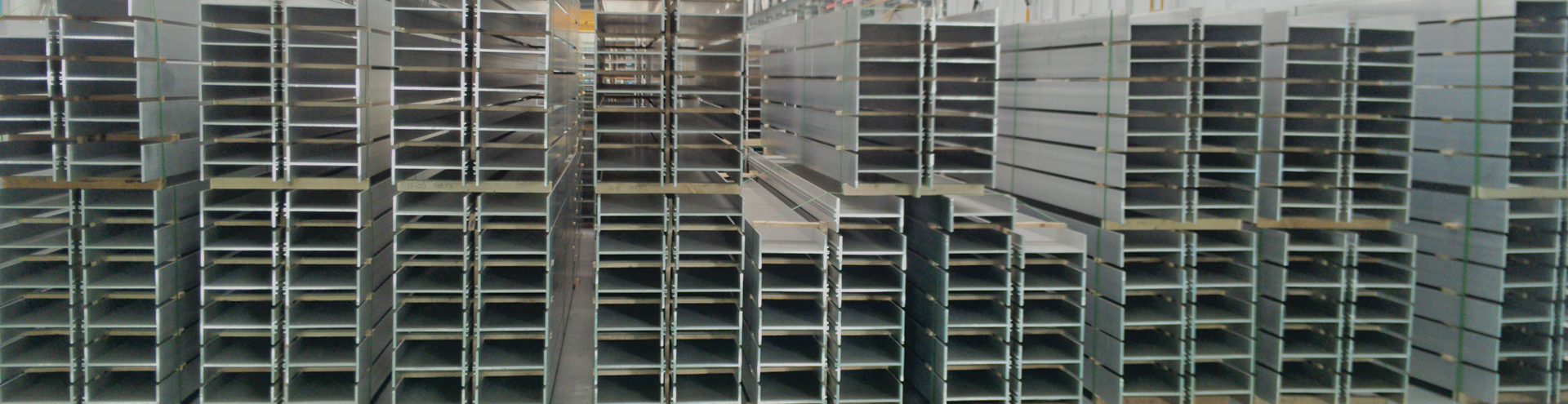
Driven by the rapid development of automotive lightweight applications, new energy equipment, aerospace, and electronic information industries, aluminum alloys have become one of the most widely used non-ferrous structural materials in industrial applications due to their high specific strength, corrosion resistance, excellent formability, and recyclability. As the upstream process of the aluminum processing industry chain, aluminum alloy melting and casting plays a critical role in melting and blending aluminum ingots with alloying elements, removing impurities, and forming solidified billets. The chemical composition uniformity, structural density, and surface integrity of cast billets directly determine the mechanical properties and service life of subsequent extrusion, rolling, and forging products.
However, in large-scale continuous production environments, aluminum alloy melting and casting processes continue to face recurring quality problems that are difficult to eliminate. Even with strict implementation of established process standards, defects such as porosity, inclusions, chemical segregation, and hot or cold cracking remain difficult to completely prevent. Conventional process adjustments and equipment maintenance can only temporarily relieve quality deterioration but cannot achieve long-term stable production performance. Quality fluctuations between different shifts and production batches remain significant, while the yield rate of high-end products often stays at a relatively low level. These quality issues not only increase raw material losses, energy consumption, and production delays, but also restrict companies from expanding into high-end aluminum material markets.
Why do quality problems in aluminum alloy casting often remain a case of treating symptoms rather than addressing root causes? What hidden factors during production continue to trigger defects? How can companies establish a practical and replicable full-process quality control system to fundamentally solve these persistent problems? This article focuses on the entire aluminum alloy melting and casting process, systematically analyzes typical quality defects, deeply explores their technical and management-related causes, and proposes targeted solutions and long-term prevention mechanisms. The goal is to provide practical guidance for aluminum processing companies seeking to improve casting stability, reduce costs, and enhance product quality.
1. Aluminum Alloy Melting and Casting Process and Core Characteristics of Quality Issues
Aluminum alloy melting and casting is a typical continuous production process involving multiple interconnected operations and strong parameter interactions. The complete production chain includes eight major stages: raw material preparation and batching, melting and alloy adjustment in furnaces, in-furnace refining and online purification, homogenization holding in holding furnaces, semi-continuous casting, circulating cooling and solidification, sawing and finishing, and non-destructive inspection before storage. Throughout the process, complex interactions occur among temperature fields, flow fields, and stress fields. Any deviation in process parameters at one stage may eventually appear as quality defects in the final cast billet.
Compared with visible quality issues in conventional machining processes, quality defects in casting production have four major characteristics, which are also the fundamental reasons why they are difficult to control.
First is their hidden and delayed nature. Micro-level hydrogen content, micron-scale inclusions, and microscopic chemical composition variations inside molten aluminum cannot be identified visually. Most defects are only discovered after billet formation through ultrasonic testing, section analysis, or mechanical property testing. By the time problems are detected, large quantities of products may already have been produced, making corrective actions extremely costly.
Second is their complexity and multiple causation. A single defect is often caused by several interacting factors rather than one isolated issue. For example, porosity may simultaneously result from moisture in raw materials, poor furnace sealing, improper degassing parameters, and excessive environmental humidity. Correcting only one factor is usually insufficient to eliminate the problem completely.
Third is recurrence and periodicity. Some defects may temporarily disappear after process adjustments, but they often return due to equipment wear, changes in raw material batches, or variations in operator practices. Maintaining a consistently stable quality level is therefore challenging.
Fourth is randomness and variability. Even under similar production conditions, billet quality may vary significantly between different shifts, seasons, and furnace batches. Defects often occur without obvious patterns, increasing the difficulty of prediction and prevention.
From the perspective of production impact, casting quality defects affect the entire industrial chain. Minor surface defects and localized inclusions may downgrade billet usage and increase machining allowances during subsequent processing. Internal cracks, severe porosity, or excessive chemical deviations may result in the rejection of entire billets or furnace batches, causing direct losses in raw materials and energy consumption. If defective billets enter downstream processes, they may lead to cracking during further processing, failure to meet final product performance requirements, and damage to customer confidence. Therefore, solving casting quality problems is not only a technical requirement but also a necessary step for companies to reduce costs, improve efficiency, and strengthen competitiveness.
2. Typical Quality Defects and In-Depth Analysis of Their Root Causes
Aluminum alloy casting defects are diverse in nature. Based on defect characteristics, they can be classified into three major categories: internal melt quality defects, structural and composition defects, and forming-related surface defects. Each type of defect corresponds to specific weaknesses in production process control.
2.1 Internal Melt Quality Defects: Porosity and Inclusions
Porosity and inclusions are among the most common internal defects in aluminum alloy casting. They are also the primary factors affecting billet density and mechanical performance.
2.1.1 Porosity Defects
Most porosity defects in aluminum alloys are hydrogen-related pores, appearing as dispersed small cavities inside the billet. In severe cases, concentrated porosity zones may develop. Hydrogen is the only gas that can dissolve extensively in molten aluminum. Its solubility increases significantly as temperature rises. During solidification, hydrogen solubility decreases sharply, causing supersaturated hydrogen to precipitate and become trapped inside the billet, forming pores.
From the perspective of the entire production process, hydrogen sources mainly include four pathways.
The first source is moisture introduced through raw materials. Recycled aluminum chips, scrap materials, used aluminum products, and alloy additives may contain surface moisture, oil contamination, or residual water. Under high-temperature conditions, water decomposes and generates hydrogen, becoming one of the most important hidden sources of gas defects.
The second source is moisture and air infiltration from furnaces and the production environment. Poor sealing of melting furnaces and holding furnaces allows humid air to continuously enter the system. At high temperatures, water vapor can decompose and introduce hydrogen into the molten aluminum.
The third source is ineffective degassing treatment. Insufficient purity of degassing gas, worn degassing rotors, or improper matching between rotation speed and treatment time can reduce degassing efficiency, preventing effective removal of dissolved hydrogen from the melt.
The fourth source is improper process operation. Excessively high melting temperatures significantly accelerate hydrogen absorption. If the holding time after refining is insufficient, residual gas bubbles cannot fully float to the surface before the melt enters the casting process, resulting in internal porosity.
2.1.2 Inclusion Defects
Inclusions refer to non-metallic impurities trapped inside aluminum alloy billets. They mainly include oxide inclusions such as aluminum oxide and magnesium oxide, as well as furnace lining fragments, undissolved alloy particles, and residual slag. These inclusions usually appear as dot-shaped, strip-shaped, or irregular particles. They interrupt the continuity of the metal matrix, reduce mechanical properties, and may become stress concentration points that trigger cracking during subsequent processing.
The formation of inclusions can generally be divided into three categories.
The first category is internally generated oxide slag. Molten aluminum has high chemical activity and easily reacts with oxygen at high temperatures to form aluminum oxide films. Frequent furnace opening, excessive stirring, and rapid charging operations accelerate melt oxidation, producing large quantities of fine oxide inclusions suspended in the melt that are difficult to remove naturally.
The second category is external contamination. Long-term accumulation of slag at furnace bottoms or furnace walls, deterioration and shedding of refractory materials, and insufficient cleaning of launders and pouring systems can introduce foreign particles into the molten metal.
The third category is the limitation of refining and filtration processes. Traditional single refining agents are mainly effective in removing larger slag particles through adsorption and flotation, but their ability to eliminate micron-sized suspended inclusions is limited. If online filtration systems use inappropriate filter pore sizes or if filter plates are damaged, fine impurities cannot be effectively removed.
2.2 Structural and Composition Defects: Chemical Segregation, Porosity, and Shrinkage Cavities
These defects directly affect the uniformity of chemical composition and structural density of aluminum alloy billets and are key factors determining product performance stability.
2.2.1 Chemical Segregation
Chemical segregation can be divided into macro-segregation and micro-segregation. Macro-segregation refers to differences in alloy element concentration between different regions of the billet, such as the upper and lower sections or the head and tail areas. Micro-segregation refers to uneven distribution of alloy elements between individual grains. Chemical segregation results in inconsistent mechanical properties in different areas of the billet and prevents products from meeting the strict uniformity requirements of high-end applications.
The main causes include four aspects.
First, incomplete alloy dissolution and insufficient mixing. Different alloying elements have different melting points and densities. Improper charging sequences or insufficient stirring can cause high-density elements to accumulate locally, resulting in uneven chemical composition.
Second, unstable element loss during melting. Elements such as magnesium and zinc have high evaporation tendencies at elevated temperatures. Large fluctuations in melting temperature and inconsistent holding times can cause variations in alloy composition between different production batches.
Third, gravity segregation. Excessively long holding times allow high-density elements to gradually settle while low-density elements rise, resulting in composition differences between the upper and lower portions of the molten metal.
Fourth, inadequate batching control. Recycled materials with unstable compositions may not undergo sufficient analysis before production. Manual weighing operations may also introduce errors, causing alloy composition to deviate from required specifications.
2.2.2 Porosity and Shrinkage Cavities
Porosity and shrinkage cavities are internal defects formed when feeding compensation is insufficient during solidification. Shrinkage cavities are generally concentrated in the center or tail section of billets and appear as relatively large internal voids. Porosity consists of numerous smaller cavities distributed throughout the structure. Both defects significantly reduce billet density and mechanical properties.
The fundamental cause lies in an imbalance between solidification shrinkage and feeding capacity.
First, excessive casting speed. When solidification proceeds faster than feeding, the remaining molten metal cannot effectively compensate for volume contraction, leading to internal void formation.
Second, excessive cooling intensity. Rapid surface solidification creates a hardened shell around the billet, restricting internal shrinkage compensation and preventing effective feeding.
Third, inappropriate temperature gradients. Excessive temperature differences between the billet surface and interior disrupt the solidification sequence and cause feeding channels to close prematurely.
Fourth, excessive gas content and inclusions in the melt. Gas bubbles and impurities occupy solidification space, further accelerating the formation of internal cavities.
2.3 Forming and Surface Defects: Hot Cracks, Cold Cracks, and Surface Segregation Defects
These defects are visible quality problems that directly affect billet appearance and subsequent processing efficiency. Severe cracking may result in complete product rejection.
2.3.1 Hot and Cold Cracking
Hot cracks occur during the final stage of solidification and usually develop along grain boundaries, appearing as irregular network-like cracks. Cold cracks occur during the lower-temperature cooling stage after solidification and typically appear as straight cracks crossing grains, often distributed longitudinally or transversely. Cracking is one of the most serious casting defects because it directly reduces material load-bearing capacity and can easily cause failure during subsequent processing.
The fundamental cause of cracking is that internal stress generated during solidification exceeds the tensile strength of the alloy. The main influencing factors include the following aspects.
First, imbalance of thermal stress. Improper casting temperatures and uneven cooling intensity cause differences in shrinkage rates between the surface and interior of the billet, generating significant tensile stress.
Second, improper matching of casting speed. Excessive casting speed may leave the billet interior insufficiently solidified, resulting in weak structures that are prone to cracking under stress. Excessively slow casting speed may cause excessive surface hardening, restricting internal shrinkage and generating tensile stress.
Third, abnormal conditions of the mold and casting equipment. Wear, scaling, or deformation of the casting mold surface can cause uneven cooling and stress distribution. Uneven cooling water flow may create localized excessive cooling and stress concentration.
Fourth, improper post-casting cooling. Rapid exposure to outdoor conditions after demolding may create excessive temperature differences between the surface and interior. Improper stacking, impact, or compression during storage may also induce cold cracking.
2.3.2 Surface Segregation Defects and Surface Marks
Surface segregation defects appear as localized raised areas on the billet surface, where the chemical composition differs from the surrounding matrix. Surface marks are mainly longitudinal scratches or grooves along the casting direction. These defects increase the amount of machining, grinding, and surface removal required during subsequent processing, reducing material utilization efficiency.
Surface segregation defects are mainly caused by abnormal temperature conditions in the casting mold, which lead to localized enrichment and precipitation of alloying elements. Uneven mold lubrication, fluctuations in molten metal temperature, and unstable casting speed can also contribute to the formation of surface segregation defects.
Surface marks are mainly related to poor mold surface conditions, including rough inner walls, scale accumulation, foreign particles, and insufficient lubrication, all of which increase friction between the billet and the mold surface.
3.Hidden Quality Causes in Production Management
Many companies experience a recurring cycle of “corrective action, temporary improvement, and quality deterioration again” in aluminum alloy casting quality management. The fundamental reason is that companies often focus only on technical process adjustments while overlooking hidden weaknesses in production organization and management systems.
3.1 Lack of Standardized Shift Operations
Different production teams may have different operating habits on the same production line. The duration of furnace door opening, intensity of stirring, effectiveness of slag removal, and methods of parameter adjustment may vary significantly between operators. These small operational differences accumulate over time and eventually result in batch-to-batch quality fluctuations.
3.2 Insufficient Preventive Equipment Maintenance
Casting equipment operates under continuous high-load conditions for long periods. Hidden equipment issues such as degassing rotor wear, temperature sensor deviation, cooling water pipeline scaling, and casting mold aging may not directly cause production stoppages but can continuously affect process stability and trigger quality defects.
Many companies rely mainly on corrective maintenance after equipment failures occur, while lacking regular calibration, preventive inspections, and systematic maintenance programs.
3.3 Weak Raw Material Control
Insufficient control over recycled aluminum materials and alloy additives during incoming inspection and preparation creates significant risks. Materials containing excessive moisture, contamination, or unstable chemical compositions may enter production directly, creating hidden sources of defects from the beginning of the process.
3.4 Poor Adaptability of Process Parameters
Some companies apply the same process parameters to different alloy grades and product specifications without considering variations in alloy characteristics, billet dimensions, or environmental conditions. This lack of dynamic adjustment results in poor matching between process conditions and actual production requirements, reducing quality control accuracy.
4.Full-Process Systematic Quality Improvement and Defect Prevention Measures
Solving persistent quality problems in aluminum alloy casting requires companies to move away from fragmented corrective actions and adopt a systematic approach covering raw materials, processes, equipment, operations, and management. Only through full-process control can defects be fundamentally reduced and production stability improved.
4.1 Improving Melt Purity: Establishing a Comprehensive Gas and Inclusion Control System
To address porosity and inclusion defects, companies should focus on the principle of “reducing sources at the beginning, strengthening control during processing, and blocking defects at the final stage” to comprehensively improve molten metal purity.
4.1.1 Strict Control of Gas and Impurity Sources
Companies should establish standardized raw material preparation procedures. All recycled aluminum chips, scrap materials, and secondary aluminum resources should undergo magnetic separation, cleaning, oil removal, and drying treatment to ensure that raw materials are free from moisture and oil contamination.
All alloying elements, refining agents, and covering agents should be stored in sealed conditions and dried before use. A strict raw material acceptance standard should be established, and materials with excessive moisture, heavy oxidation, or unknown composition should be prohibited from entering production.
4.1.2 Strengthening Refining and Purification Process Efficiency
The rotary degassing process should be optimized. High-purity argon gas with a purity of no less than 99.99% should be used as the degassing medium. Gas pipelines should be regularly inspected for sealing performance, and accumulated moisture inside pipelines should be removed.
Degassing parameters should be matched according to furnace capacity and alloy grade. Rotor speed should generally be controlled at 300 to 450 rpm, with a treatment duration of 8 to 12 minutes, ensuring that gas bubbles are sufficiently fine and evenly distributed throughout the melt for effective hydrogen removal.
After refining, a holding period of 15 to 25 minutes should be maintained to allow sufficient time for gas bubbles and inclusions to float to the surface.
For slag removal and filtration, composite refining agents suitable for specific alloy grades should be adopted instead of traditional single refining agents to improve the adsorption and aggregation ability for fine suspended slag.
A two-stage ceramic filtration system should be installed in the molten metal flow channel. Coarse filtration can use 20 to 30 mesh filter plates, while fine filtration can use 40 to 60 mesh filter plates. Filter conditions should be regularly inspected, and damaged filter plates should be replaced promptly to achieve effective removal of micron-level impurities.
4.1.3 Optimizing Furnace Sealing and Environmental Control
Melting furnaces and holding furnaces should undergo regular inspection of furnace doors, observation openings, and exhaust sealing structures. Aging sealing components should be replaced in time to maintain slight positive pressure inside the furnace and reduce external air infiltration.
Production workshops should be equipped with humidity control facilities, maintaining relative humidity below 60%. During periods of high humidity or rainy weather, appropriate adjustments should be made, such as extending preheating and drying time, to reduce the influence of environmental moisture on molten aluminum quality.
4.2 Composition and Structural Optimization: Achieving Homogenized and Densified Production
To address chemical segregation, porosity, and shrinkage defects, precise control should be implemented across three key stages: batching, melting, and casting, ensuring uniform composition and dense internal structures.
4.2.1 Precise Chemical Composition Control
A pre-production material composition inspection system should be established. All incoming raw materials should undergo batch-by-batch chemical composition testing. Based on actual test results, alloying ratios should be calculated and adjusted to compensate for raw material fluctuations.
Automated batching systems should be introduced to replace manual weighing operations. A dual verification system should be implemented to minimize batching errors and ensure composition accuracy.
The charging and mixing processes should also be optimized. The principle of “adding high-melting-point materials first, adding easily evaporated elements later, and ensuring sufficient mixing of high-density elements” should be followed to achieve proper alloy distribution.
Fully automated mechanical stirring equipment should be adopted. During the melting stage, constant-temperature stirring should be maintained for 5 to 8 minutes to ensure complete dissolution and uniform distribution of alloying elements.
A segmented temperature control strategy should be implemented to reduce element loss. Different temperature settings should be applied during melting, alloy dissolution, and holding stages. Closed-loop temperature control systems should be used throughout the process, maintaining temperature fluctuations within ±5°C.
For easily evaporated elements such as magnesium and zinc, the final melting temperature should be appropriately reduced, high-temperature holding time should be shortened, and anti-oxidation covering agents should be used to improve element recovery stability.
4.2.2 Optimization of Densification Casting Processes
A reasonable casting speed should be selected according to billet dimensions and alloy characteristics. For large-size billets and highly alloyed materials, casting speed should be appropriately reduced to ensure sufficient feeding capability during solidification.
A segmented casting speed control strategy should be adopted, including low-speed startup, stable-speed operation, and gradual speed reduction during the final stage. This helps prevent sudden changes in casting conditions from affecting solidification stability.
A gradient cooling system should be established. Cooling water pressure and flow rate should be adjusted to achieve weak cooling during the initial casting stage, stable cooling during the middle stage, and gradual cooling during the later stage.
This approach reduces temperature differences between the billet surface and interior, promotes sequential solidification from the outside toward the inside, and maintains effective feeding channels.
Cooling water temperature should be strictly controlled within 25 to 35°C, while water pressure should remain stable between 0.2 and 0.4 MPa to ensure uniform cooling conditions.
The final-stage feeding process should also be strengthened. During casting completion, casting speed should be reduced and molten metal temperature should be increased appropriately to extend feeding time and effectively reduce shrinkage cavities and porosity at the billet tail section.
4.3 Forming Defect Prevention: Balancing Stress Control and Surface Quality
To prevent cracking and surface defects, the focus should be placed on balancing solidification stress and optimizing casting mold conditions to improve billet forming quality.
4.3.1 Precise Crack Prevention and Control
Casting temperature and cooling conditions should be optimized according to alloy characteristics. For hard aluminum alloys and large-size billets, casting temperatures should be appropriately reduced to minimize solidification shrinkage stress. For softer aluminum alloys, casting temperatures may be slightly increased to improve forming stability.
Cooling water distribution should be strictly controlled. Spray holes should be regularly cleaned and maintained to prevent localized excessive cooling and stress concentration.
Casting mold maintenance should be carried out with higher precision. The mold inner surface should be inspected daily to remove scale and oxide layers. Worn or deformed areas should be repaired promptly.
The concentricity and vertical alignment of the mold should be regularly calibrated to prevent uneven billet wall thickness and uneven stress distribution.
Suitable specialized lubricants should be selected and applied evenly to reduce friction between the billet and mold surface.
Post-casting cooling and storage procedures should also be standardized. After demolding, billets should undergo controlled cooling inside the workshop rather than being exposed directly to outdoor environments for rapid cooling.
Storage methods should be standardized, with flexible separation layers placed between billets to prevent excessive compression and impact, thereby reducing the risk of cold cracking.
4.3.2 Surface Defect Control
The inner surface of casting molds should be regularly polished and maintained to ensure smoothness and prevent damage.
The amount and distribution uniformity of lubricants should be strictly controlled to avoid excessive accumulation or insufficient lubrication in localized areas.
Casting temperature and speed should remain stable to reduce surface segregation defects caused by process fluctuations.
For minor surface defects, automated grinding and finishing equipment should be introduced to improve surface qualification rates and reduce material losses.
4.4 Production Management Upgrading: Establishing a Foundation for Stable Quality
Technical improvements can only achieve long-term results when supported by a comprehensive production management system. Management optimization is essential to eliminate quality fluctuations caused by human factors and organizational weaknesses.
4.4.1 Implementing Standardized Full-Process Operations
Standard operating procedures should be developed covering all production stages. Operating steps, process parameters, inspection standards, and key precautions should be clearly defined and quantified to ensure consistency among different production teams.
Regular operational training and skill assessments should be conducted to ensure that employees fully understand and correctly execute standardized procedures, reducing variations caused by individual operating habits.
4.4.2 Establishing a Preventive Equipment Maintenance System
A four-level maintenance system consisting of daily inspection, weekly maintenance, monthly calibration, and annual overhaul should be established.
Daily inspections should focus on equipment operating conditions and cleaning of critical components.
Weekly maintenance should include lubrication and servicing of moving parts.
Monthly maintenance should include calibration of temperature control systems, speed sensors, and pressure sensors to ensure measurement accuracy.
Annual overhauls should involve comprehensive equipment inspection and replacement of aging components.
Equipment maintenance records should be established to achieve full lifecycle management of production equipment.
4.4.3 Establishing a Full-Process Quality Traceability System
A unique identification system should be established for every furnace batch and every cast billet. Complete production records should be maintained, including raw material batches, process parameters, operators involved, inspection results, and other key information throughout the production process.
When quality problems occur, the traceability system should enable rapid identification of potential causes and accurate corrective actions, avoiding repeated occurrence of similar defects and improving the efficiency of quality management.
4.4.4 Establishing a Rapid Response Mechanism for Abnormal Conditions
Critical process parameters should be monitored and warning thresholds should be established. Intelligent monitoring systems should be integrated into production lines to automatically issue alerts when parameters deviate from normal ranges.
Clear response procedures should be developed for different types of quality abnormalities, with defined responsibilities and handling processes.
Minor deviations should be corrected immediately through process adjustments, while major abnormalities should trigger production suspension and systematic investigation to prevent large-scale defects caused by continued operation under unstable conditions.
5.Establishing a Long-Term Quality Control and Continuous Improvement System
Achieving long-term stability in aluminum alloy casting quality requires a transition from temporary corrective actions to systematic prevention. Companies need to establish a continuous improvement cycle that enables ongoing optimization of production quality.
5.1 Building a Digital Quality Management Platform
Production data from melting, casting, inspection, and other key stages should be integrated into a digital quality management platform. Through real-time visualization and analysis of production information, companies can identify quality fluctuation patterns, predict potential risks, and shift quality management from post-event correction toward proactive prevention.
5.2 Establishing a Continuous Process Optimization Mechanism
Quality issues and improvement experiences should be regularly reviewed and incorporated into process optimization databases.
Dedicated process solutions should be developed for different alloy grades and product specifications to improve process adaptability.
Small-scale production trials should be conducted to verify the effectiveness of new technologies and methods before large-scale implementation, enabling gradual improvement of overall production quality.
5.3 Strengthening Technical Personnel Development
Regular technical training, operational skill competitions, and case-based quality reviews should be conducted to improve employees’ quality awareness and operational capabilities.
A professional technical team should be developed through continuous experience accumulation and knowledge sharing.
Quality performance evaluation systems should be established, linking quality indicators with team performance assessments to strengthen responsibility awareness among all employees.
Conclusion
Improving aluminum alloy casting quality is a comprehensive systematic project involving raw materials, processes, equipment, personnel, and management. It cannot be achieved through isolated process adjustments or individual equipment upgrades alone.
The repeated occurrence of defects such as porosity, inclusions, segregation, and cracking fundamentally reflects weaknesses in full-process control systems and insufficient prevention capabilities.
Only by implementing comprehensive management across the entire production chain, including strict raw material control at the source, enhanced melt purification and casting process optimization, reliable equipment performance assurance, standardized operating procedures, and integrated quality management systems, can companies truly overcome persistent quality challenges and achieve long-term stable billet quality.
As the aluminum processing industry continues moving toward higher performance, precision, and specialization, quality control capabilities in the melting and casting stage will become a key competitive advantage for enterprises.
A systematic, digital, and refined quality management system will further drive aluminum alloy casting production toward higher quality, lower costs, and greater operational efficiency, supporting the sustainable development of the aluminum industry.
Post time: Jul-29-2026


