
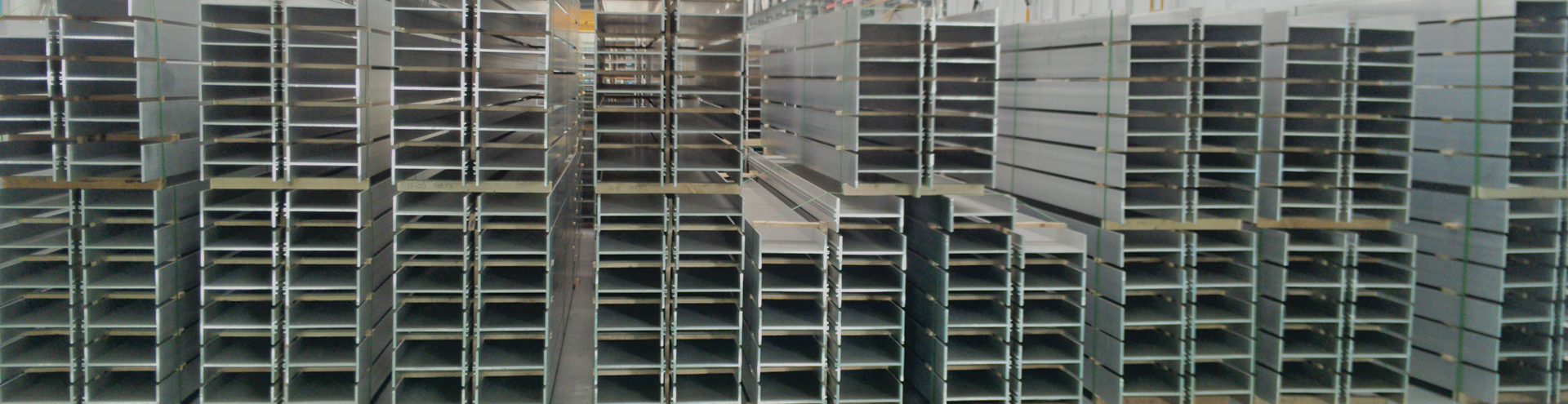
This article covers the entire process from raw material to aluminum profile, allowing you to thoroughly understand the components of the processing cost of the profile.
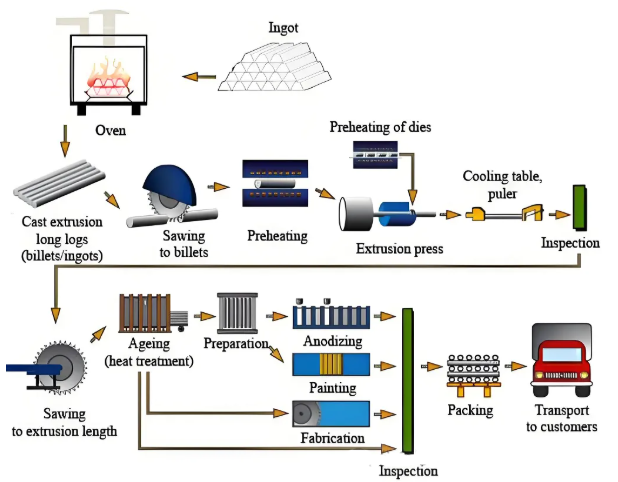
The profile processing includes the following four steps:
Billet Forming (Melting) → Annealing → Extrusion → Heat Treatment
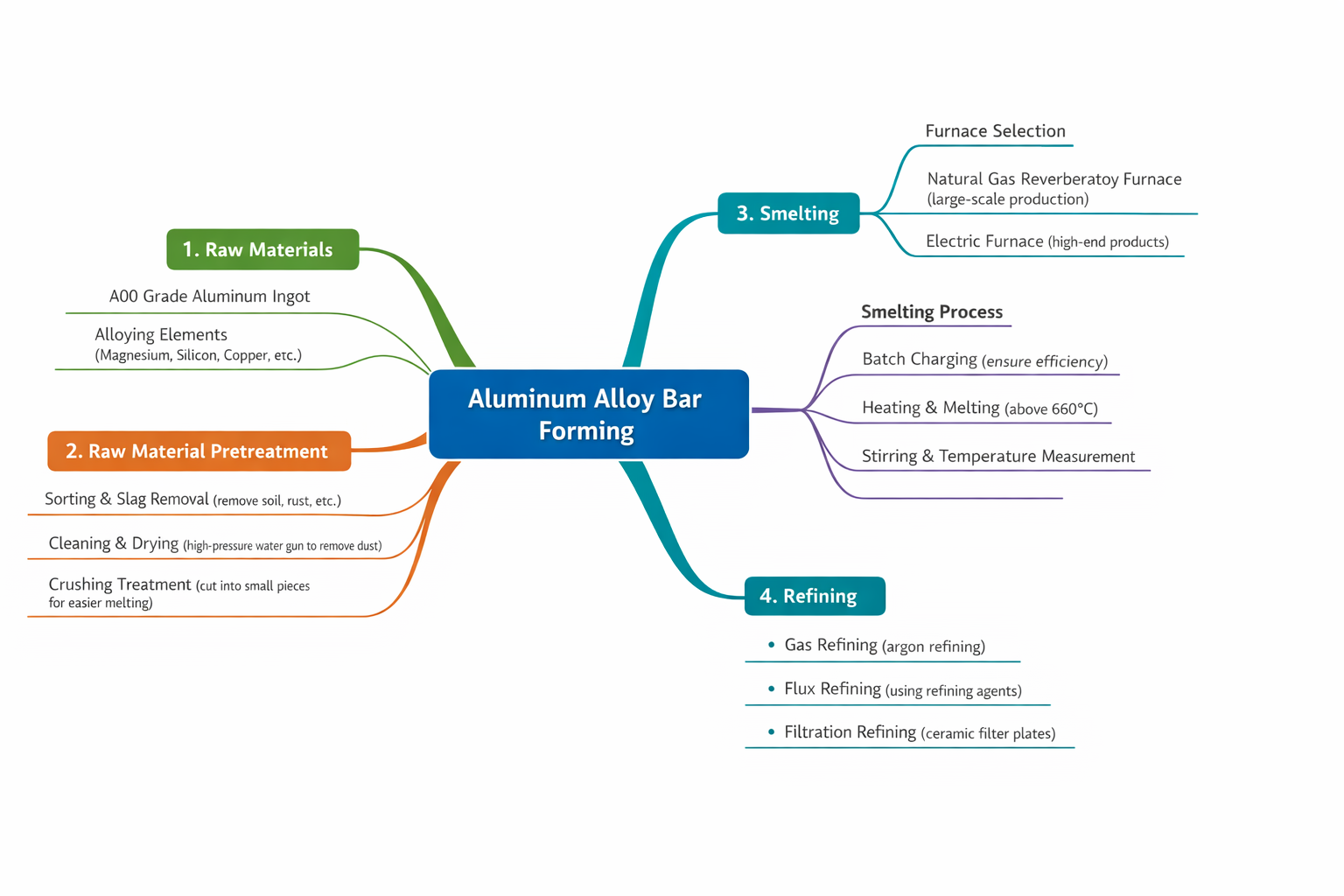
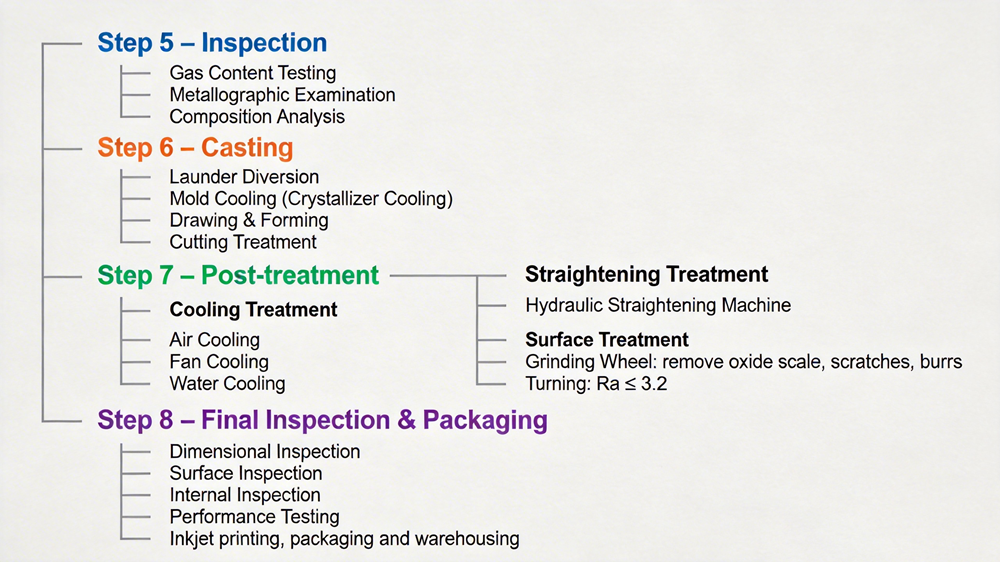
1. Melting and Casting Forming
The quality of the aluminum alloy cast ingot is crucial to the performance of the aluminum alloy material. During the melting and casting process, the cast ingot must undergo chemical composition purification, melt purification, grain refinement, and microstructure performance homogenization to ensure high metallurgical quality.
2. Homogenization Annealing
Purpose: To evenly distribute the unbalanced eutectic structure within the cast ingot, precipitate supersaturated solid solution elements from the solid solution, eliminate casting stress, improve the plasticity of the cast ingot, reduce deformation resistance, and enhance the structure and performance of the processed product.
Limitations: Can only eliminate intra-granular segregation, has little effect on regional segregation, and cannot eliminate insoluble intergranular substances and non-metallic inclusion defects.
Function: Reduces extrusion friction of the alloy, increases extrusion speed, reduces extrusion marks on the profile, and extends die life. It can reduce extrusion pressure by approximately 6%-10%.
Key Points: The annealing temperature must not be too high (which would cause coarse grains in the aluminum rod) nor too low (which would fail to completely eliminate internal stress); the holding time and cooling speed must be strictly matched to ensure the annealing effect.
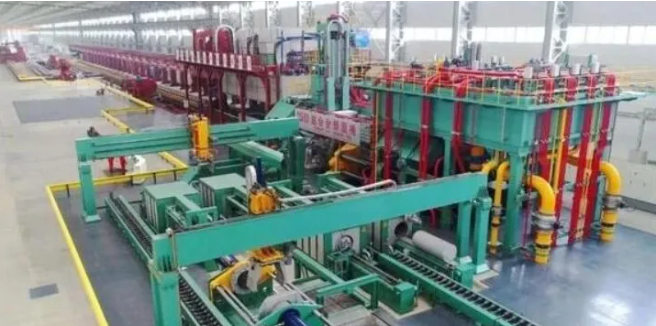
3. Extrusion Forming
Extrusion is the core process for forming aluminum profiles, equivalent to “shaping the aluminum rod.” This step directly determines the cross-sectional accuracy and appearance quality of the aluminum profile.
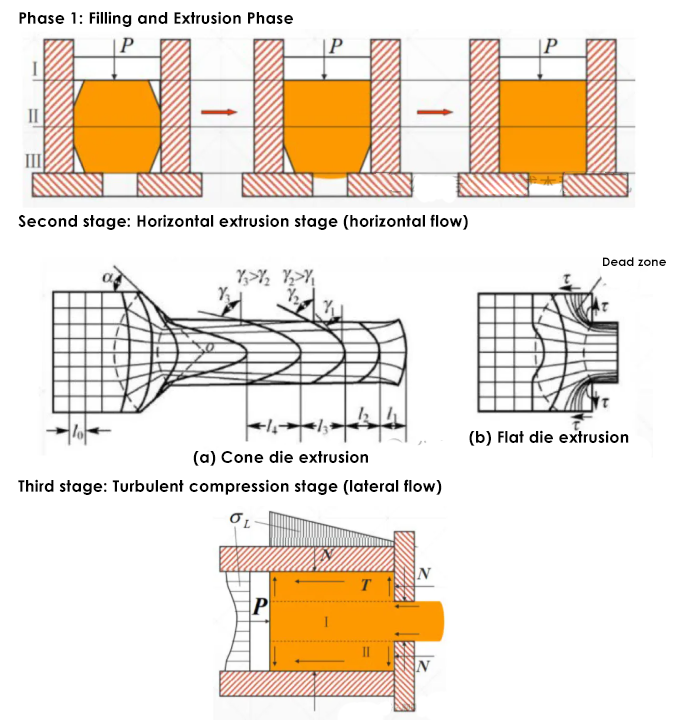
a) Basic Definition: A method where the billet is extruded from the opening or gap of a die under three-dimensional uneven compressive stress, reducing its cross-sectional area or increasing its length to become the required product.
b) Main Processes:
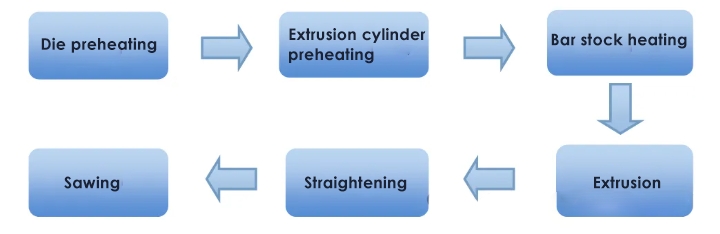
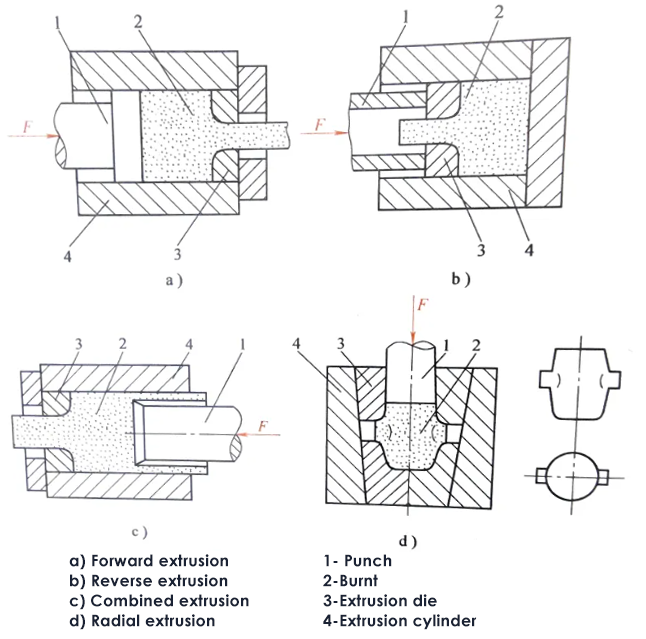
c) Four Extrusion Methods:
Based on direction, it can be classified as forward, backward, composite, and radial extrusion; based on forming temperature, it is divided into cold extrusion and hot extrusion. Cold extrusion offers higher precision, reaching IT7-8 levels, with a roughness of 0.2-1.6 μm.
d) Three Stages of Extrusion Deformation:
4. Heat Treatment
Basic (Transition) State:
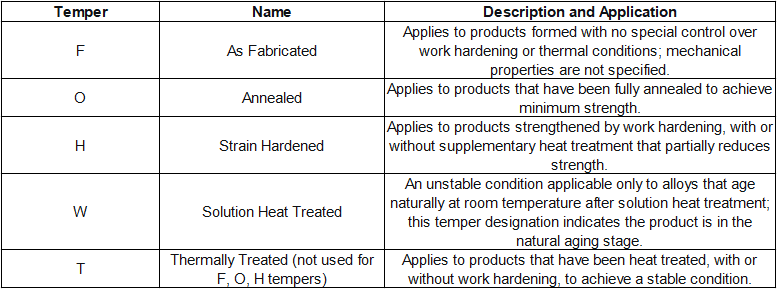
Final Heat Treatment State:
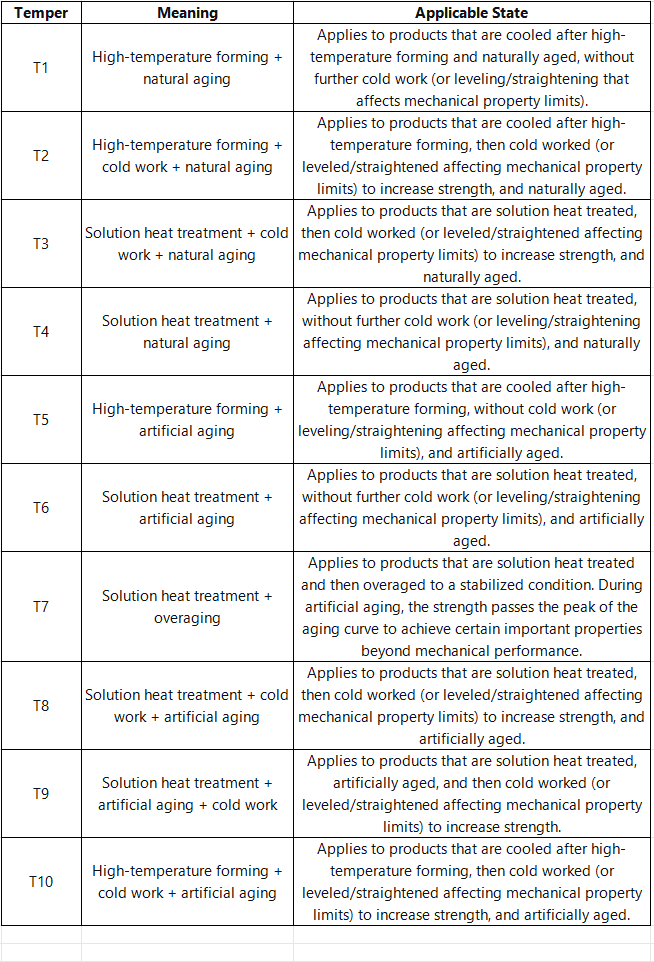
Common Heat Treatment States
T4: The aluminum profile is cooled after being extruded from the extrusion press but is not placed in an aging furnace for aging. Without aging, the aluminum profile has lower hardness and better formability, making it suitable for deformation processes such as bending.
T5: High-temperature forming (air cooling) plus incomplete artificial aging. Used to achieve relatively high strength and plasticity, but corrosion resistance will decrease. The aging temperature is low, and the holding time is short, approximately 150-170°C for 3-5 hours.
T6: Solution treatment (water cooling) plus complete artificial aging. Used to achieve the highest strength, but plasticity and corrosion resistance are reduced. Carried out at a relatively high temperature for a longer duration. Suitable for parts requiring high loads, with an aging temperature of approximately 175-185°C for over 5 hours.
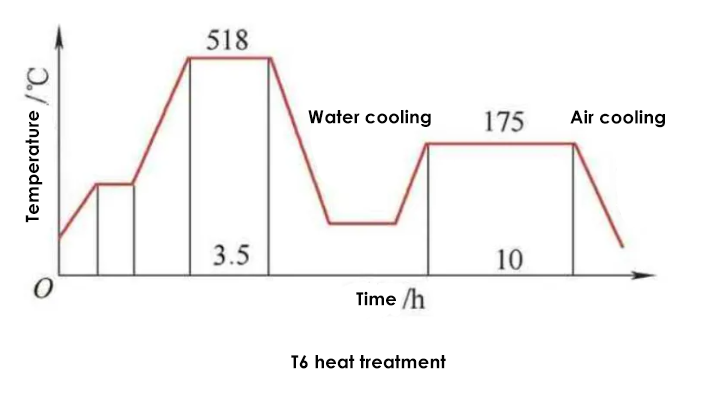
Methods for Strengthening Aluminum Alloys
Solid Solution Strengthening
Definition: Heating the cast aluminum alloy to the highest possible temperature (close to the eutectic temperature), holding it for a sufficient time to maximize the dissolution of strengthening elements, and then rapidly cooling it to room temperature to preserve the high-temperature state of the cast aluminum alloy. This heat treatment process is called solution treatment.
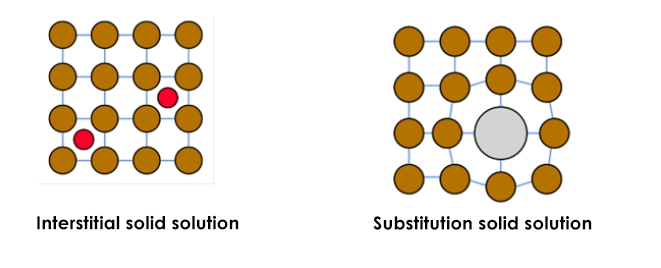
Adding alloying elements to pure aluminum forms an aluminum-based solid solution. Its solid solution strengthening effect increases the strength. According to the general principles of alloying, when forming infinite solid solutions or limited solid solutions, not only high strength can be achieved, but also excellent plasticity and good pressure processing performance.
Simply put, it involves dissolving as many strengthening elements (such as silicon, magnesium, zinc, titanium, manganese, etc.) as possible into the solvent to enhance its plasticity, strength, and processing performance.
Aging Strengthening
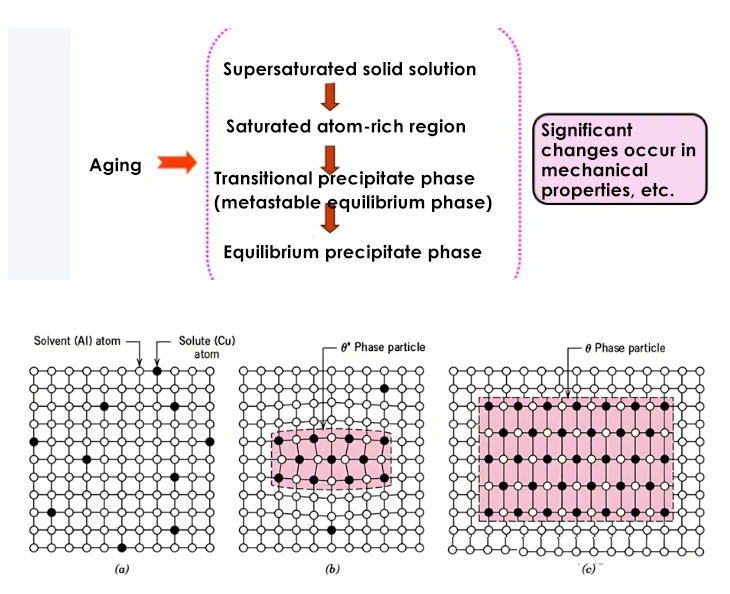
Definition: After quenching, the aluminum alloy is kept at room temperature or heated at a low temperature for a period. The phenomenon where strength and hardness significantly increase while plasticity decreases over time is called aging. It is divided into two types:
a) Aging carried out at room temperature is called natural aging;
b) Aging carried out with heating at a low temperature (100-200°C) is called artificial aging.
The essence of aging is the precipitation and growth of a second phase from the supersaturated, unstable single α solid solution. Due to the different degrees of coherency between the second phase and the parent phase (α phase), lattice distortion occurs in the parent phase, resulting in strengthening.
Simply put, it involves precipitating nanoscale second-phase particles (such as Al₂Cu, MgZn₂). These dispersed particles effectively hinder dislocation movement, further improving the material’s strength, hardness, and high-temperature stability.
Post time: Mar-29-2026


